
What is a Deviated Septum?
Nasal congestion, a very well-known condition in our society, affects a large proportion of adults, with chronic nasal congestion affecting almost a third of the population. The cause of this problem lies in the nasal septum, the central section that faithfully separates our nostrils.
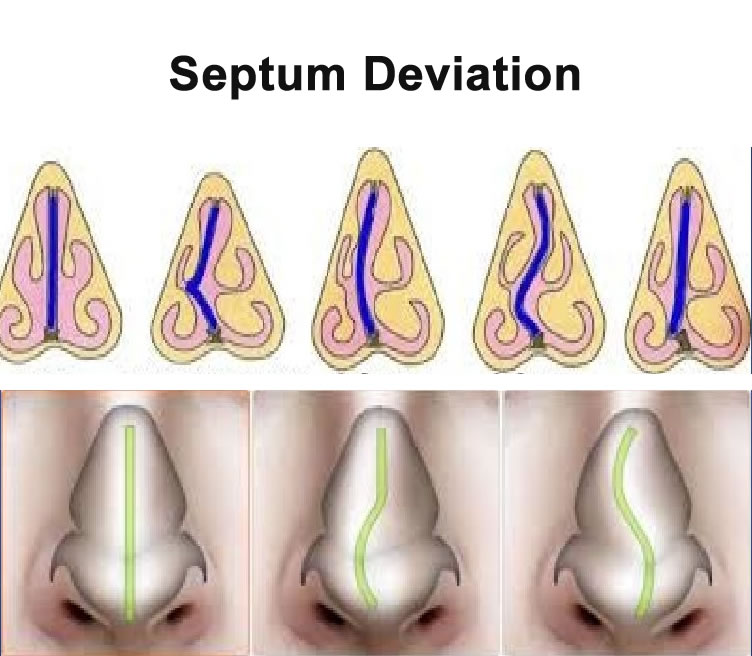
This septum consists of cartilage at the front and a delicate bony structure at the back, which is covered with a protective mucous membrane. It should be noted, however, that deviations from the midline, aptly called septal deviations, occur in about 80% of adults, although most of them do not reach a threshold that causes noticeable discomfort.
What is the Cause of a Deviated Septum?
The main trigger for this phenomenon is nasal trauma. These traumas can be caused by accidents during pregnancy or during and after birth. In addition, various minor or major traumas during childhood can lead to changes in the growth points of the nasal septum.
These disorders lead to an overproduction of cartilage, which in turn leads to a deformation of the septal cartilage and/or bone as growth progresses. In some cases, fractures may occur within the cartilage of the septum. The severity, shape and direction of these deviations depend on the size and direction of the trauma and often lead to undesirable changes in the external appearance of the nose.
Symptoms
- Nasal congestion, mouth breathing and snoring: There is usually constant congestion on the side affected by the deviation, while the opposite side suffers from intermittent congestion due to occasional swelling of the turbinate.
- Recurrent upper respiratory tract infections: In particular, individuals with significant deviations tend to have an increased frequency of upper respiratory tract infections, which often require a long recovery period.
- Frequent nosebleeds: People with obvious abnormalities may experience intermittent nosebleeds due to thinning and drying of the mucosa within the protruding area.
- Impaired sense of smell: Aberrations can obstruct the passage of odor molecules so that they no longer reach the olfactory region at the top of the nose. This in turn leads to difficulties in distinguishing odors.
- Facial pain: In some cases, the contact between the deviated septum and the nasal mucosa can cause facial pain, which often manifests as a dull ache in the front of the face. Although it is not particularly severe, it remains an annoying nuisance.
- Posterior nasal drip: Another consequence of septal deviation is posterior nasal drip, where excess mucus drips into the back of the throat, causing irritation and discomfort.
How is the Diagnosis Made?
The diagnosis of a deviated septum involves a thorough examination of the nasal passages. By carefully widening the nostrils with a special instrument, the rhinoscope, the front part of the septum is examined. An endoscopic examination is performed to obtain a comprehensive view of the back of the nasal septum, the turbinate and the openings of the paranasal sinus canals.
This involves the use of a nasal speculum, a thin instrument with a small camera and a light at the tip that can be used to explore the nose.
These examination methods are painless and quick, so that a rapid assessment is possible. In some cases, when additional nasal problems such as turbinate overgrowth, sinusitis or polyps are present, a CT scan of the paranasal sinuses can be performed for a comprehensive assessment of the nose and surrounding sinus structures.
How is the Treatment Performed?
Septoplasty
Septoplasty can be performed under general anesthesia. Before the operation, the anesthesiologist will carry out an assessment to evaluate possible obstacles or risks and perform appropriate tests.
